PHD project
4. august 2026
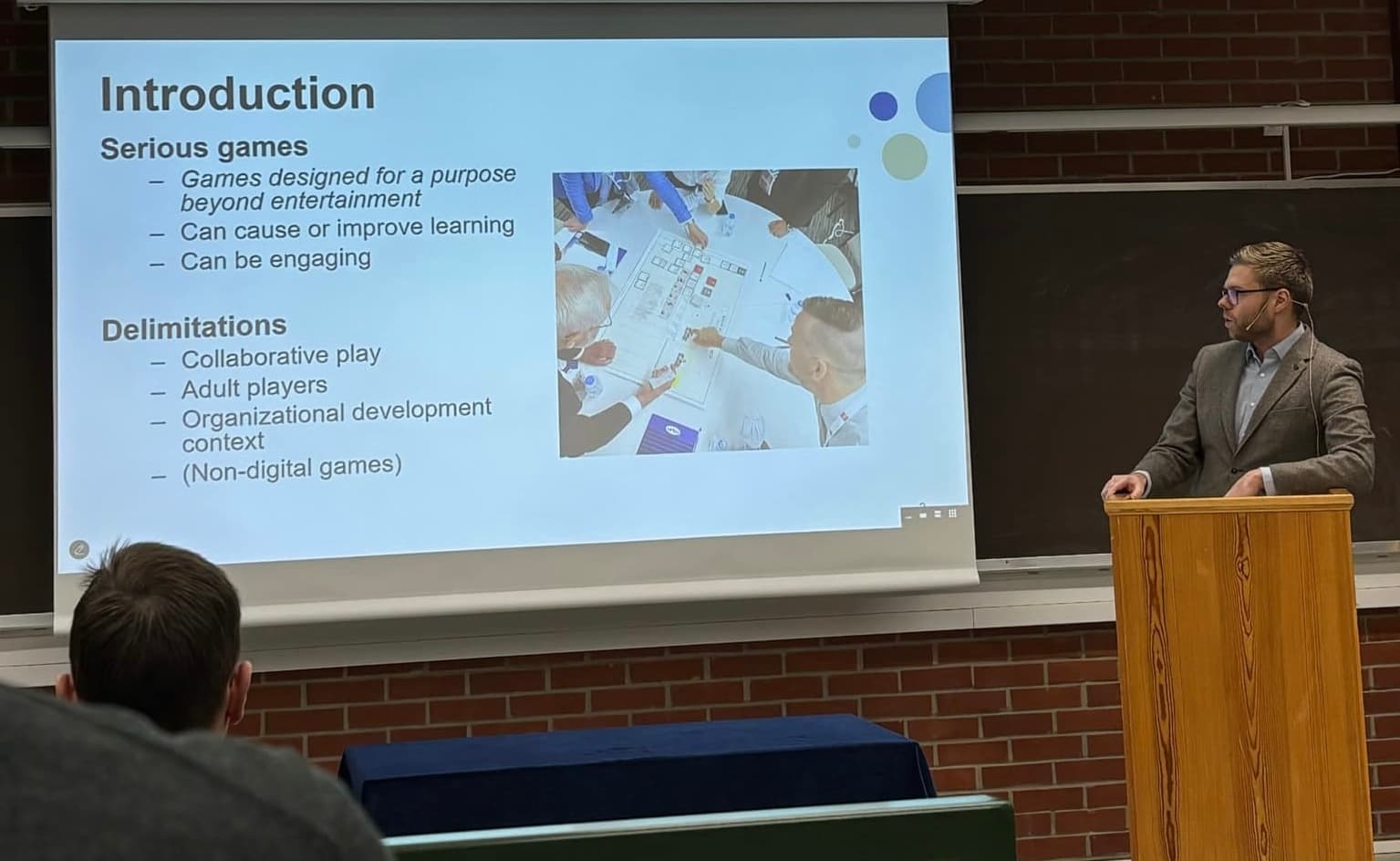
To understand more about the inner workings of serious games, we had a PhD project conducted on collaborative play, using player experiences from our games as data. The project was conducted by Håvard Almås as an industrial PhD collaboration between us and the Norwegian University of Science and Technology – funded in part by the Research Council of Norway.
The thesis explores the process of play, focusing especially on the experience of engagement, learning, and collaboration.
The aim of the thesis was to find out how collaboration is experienced, and how the process of collaboration plays out. Improving insight into this would improve understanding of how collaboration matters for learning during play, and how learning processes develop in small play groups.
The findings revealed that collaboration may arise rapidly during play when players manage their differences, face the unfamiliarity of the situation together, and adapt to the needs of the group. Furthermore, players engage in individual learning through processes such as formalizing practical experience, exploring diverging perspectives, and reflecting on others’ thinking. Shared learning experiences, on the other hand, seem to arise when players jointly overcome challenges, craft collaborative strategies, and acquire know-how together.
Findings thus indicate that games create a unique setting for collaborative learning experiences, where players swiftly engage in collaboration, learning together – depending on the specific game and the individual players. It is also established that play makes possible a way of acting and interacting that sets it apart from other approaches to learning, wherein the conditions needed for collaborative learning are rapidly established.
If you are interested in learning more about the research and its implications for practice, reach out to us or read the full thesis at https://hdl.handle.net/11250/3173540.